

The Hormonal Orchestra
For 60 years, I only heard the drums and brass. Now I'm learning the strings.

It was 4 am, and I had to be up if I wanted to run. Muscles I didn’t know existed are aching, my nose is running, and my hands are clammy. The Goa river marathon starts in two hours. My friend will pick me up soon.
That morning, I could hear an unusual voice. Not the usual “No pain, no gain!” Something quieter, gentler: “It’s ok not to fight.”
I text my friend: Don’t come. I’m not running.
DNS. Did Not Start.
For a runner, it’s worse than not finishing (DNF). But lying there at dawn, I wasn’t screaming “Fight!” like I always had. Instead, a different voice was speaking. One I’d spent decades ignoring.
I didn’t know then that was a hormone speaking.
Per aspera ad astra! Through hardships to the stars. That was my mantra. Pain was the price of entry. Suffering was proof you wanted it enough.
There are hormones at play behind this pain. I never learned the names of what was flooding my body. Cortisol, adrenaline, oxytocin. The only hormones I knew intimately were testosterone and adrenaline. From my teenage years, I have memories of how sex appeal and sport were dominant themes. That became the language I knew best. The hormones that drove study and seriousness seemed to belong to a lower caste in the teenage hierarchy than the sex hormones. Even today, some old acquaintances from those days remain stuck in that pecking order. The rest of my hormones were “out of syllabus,” playing silently in my orchestra, unheard, unnamed. As a man, I am acutely aware of my lack of intimacy with the hormonal orchestra playing inside me.
Women have constant life stage changes. Periods, childbirth, and menopause. That gives them a peek into hormones that many of us men don’t have.
Every 28 days, their hormones remind them, and they have no choice in the matter. Cramps signal progesterone dropping. Irritability marks estrogen's shift. Over the years, they learn to read their body’s signals like a language.
But that forced literacy comes at a cost. I’ve watched women colleagues push through month-end targets while battling cramps. That “window” into hormones? It’s not always wisdom. Sometimes it’s just pain you can’t ignore while the world expects you to do all that is expected of you.
Many of us men get to be hormonal illiterates. I spent decades believing I was just “who I am.” Steady, rational, unchanging. I never tracked patterns because my patterns were invisible to me. That ignorance was a privilege.
Women don’t get that luxury. Or that burden, depending on how you look at it.
I was brought up when periods were not spoken about, hidden away. Like many boys my age, I was not sensitive to this.
Then my daughters changed everything. I remember when Alisha casually mentioned at breakfast, “I’m having terrible cramps today.” She was maybe 16. My wife responded naturally, and they talked about it almost as if they were discussing the latest movie, casually. No shame.
I sat there stunned. In my entire childhood with my parents and two sisters, I’d never heard “period” spoken aloud. Here was my daughter treating her body’s rhythms as information.
My daughters openly talk about their periods. They knew a language I’d never been taught.
That window gives women something many of us men rarely develop: a vocabulary for internal states. By 25, most women can say, “I’m irritable because I’m about to get my period” or “I’m emotional because my hormones are shifting.” They’ve learned to separate “I’m angry” from “my chemistry is making me more reactive.”
What’s my equivalent vocabulary? “I’m stressed.” That’s it. I have one word for what might be cortisol, adrenaline, low testosterone, oxytocin deficit.
For years, I heard testosterone and adrenaline clearly. That served me well. I helped build companies, I ran marathons & led teams. Now I’m discovering there are other instruments I can hear. Not better instruments. Just different ones.
Women know their hormonal orchestra by name. They conduct it consciously. Or try to, even when their bodies override their plans.
But knowing a language exists and speaking it are different things.
For decades, I knew how to conduct one way: push harder. The warrior conductor. The brass section and drums drowned out everything else. I thought that was a strength. That was the music I needed then.
Then last month I met an old friend, Rina. I knew her in those days when, as a teenager, I was gangly, in awe of all girls. But my family focus was on getting good marks. The message was clear: don’t get into capers with girls. Testosterone was flooding my system, but Cortisol was the only instrument I could hear.
Rina was showing me photos on her phone. Her kids, her garden, her life.
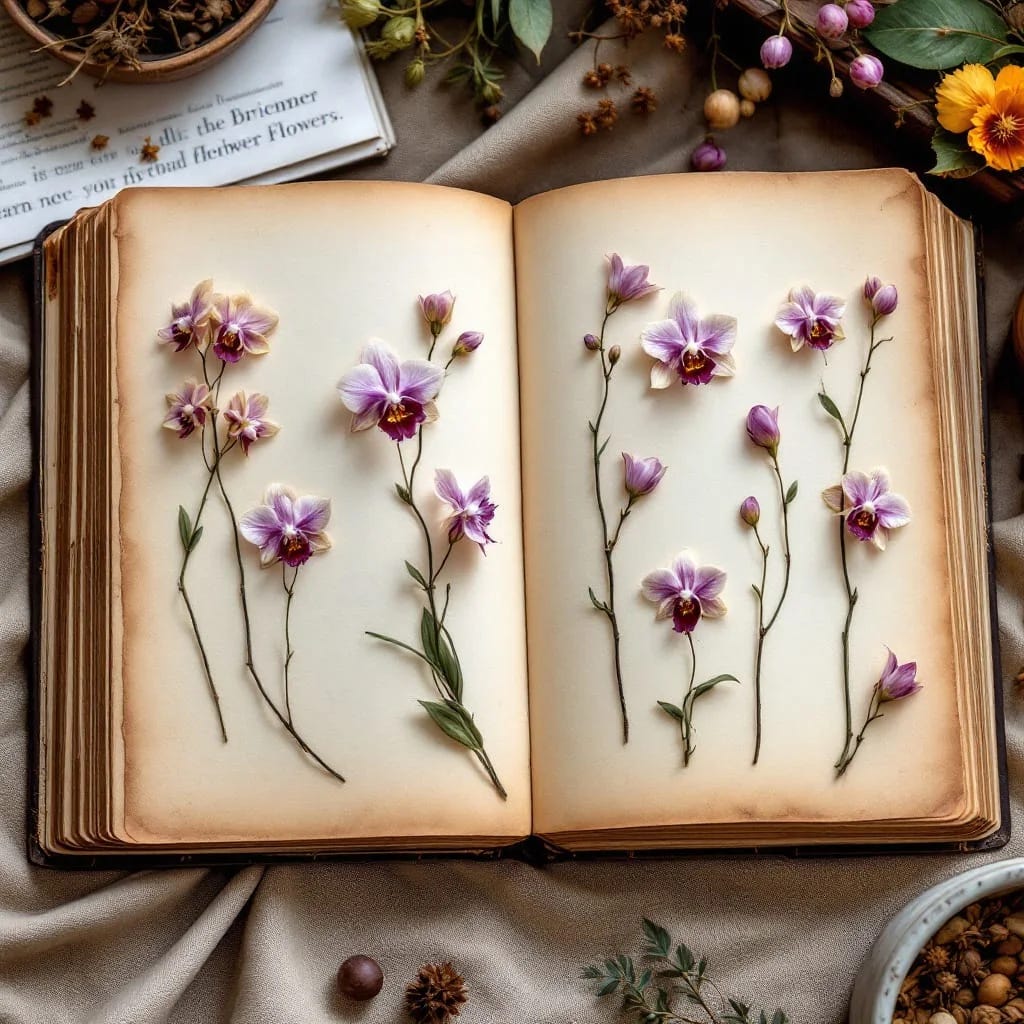
Then she stopped and smiled, “I remember Praful had gifted me this diary with a cloth cover, and he had tucked pressed flowers between the pages.”
“I still have the diary,” she said. “Praful gave it to me for my birthday. And the flowers were orchids. He remembered I loved orchids.”
Praful. The name opened a long-forgotten memory. We’d been in school together. I remembered him vaguely. Quiet guy, not particularly athletic, not part of my crowd. While I was studying hard, he was actually studying with ease & had what were then unique hobbies like Ornithology and, apparently, learning to press orchids into cloth.
“That’s sweet,” I managed, not able to get it.
“Thirty years later,” Rina said, “and I still have that diary. “
I drove home thinking: what hormone did Praful have access to that I didn’t? I’ve always found it difficult to gift easily. Something about gifting makes me uncomfortable. Making yourself vulnerable through an object.
And it’s not just gifts. It’s touch too, it’s how my body responds to physical touch.
Years ago in Vienna, I was with three of my closest friends from hostel days. People I trusted completely. We were drinking steadily. Suddenly, Sahil hugged me and said, “Boss, loosen up, tu itna stiff kyun hai!” Then he gave me a peck on the cheek and said, “Ab bol!”
I suddenly wanted to fold my arms to protect myself, change the topic, somehow get away from Sahil. I leaned back slightly, creating distance. Not because I didn’t trust him. My body just reacted that way.
What makes some men comfortable with physical connection while others back away? I do. I notice it now. Praful and Sahil seem to have access to something I’m only starting to discover. Maybe oxytocin. Body relaxed, open. Mine runs on cortisol and adrenaline. The body always ready for a threat.
Now I’m discovering there are other hormones I can hear. Gifting doesn’t have to feel this way. Touch doesn’t have to make me tense up. I’m just starting to learn this.
Praful knew all the instruments. I’m learning them now.
Today at Chicalim, South Goa, it’s different. For years, I was the tornado, ‘leading by tornado’ some called it. This morning’s fog feels different. Slower. Gentler.
I am about to run the Goa river marathon, and my body has rebelled. But this morning, I accepted it.
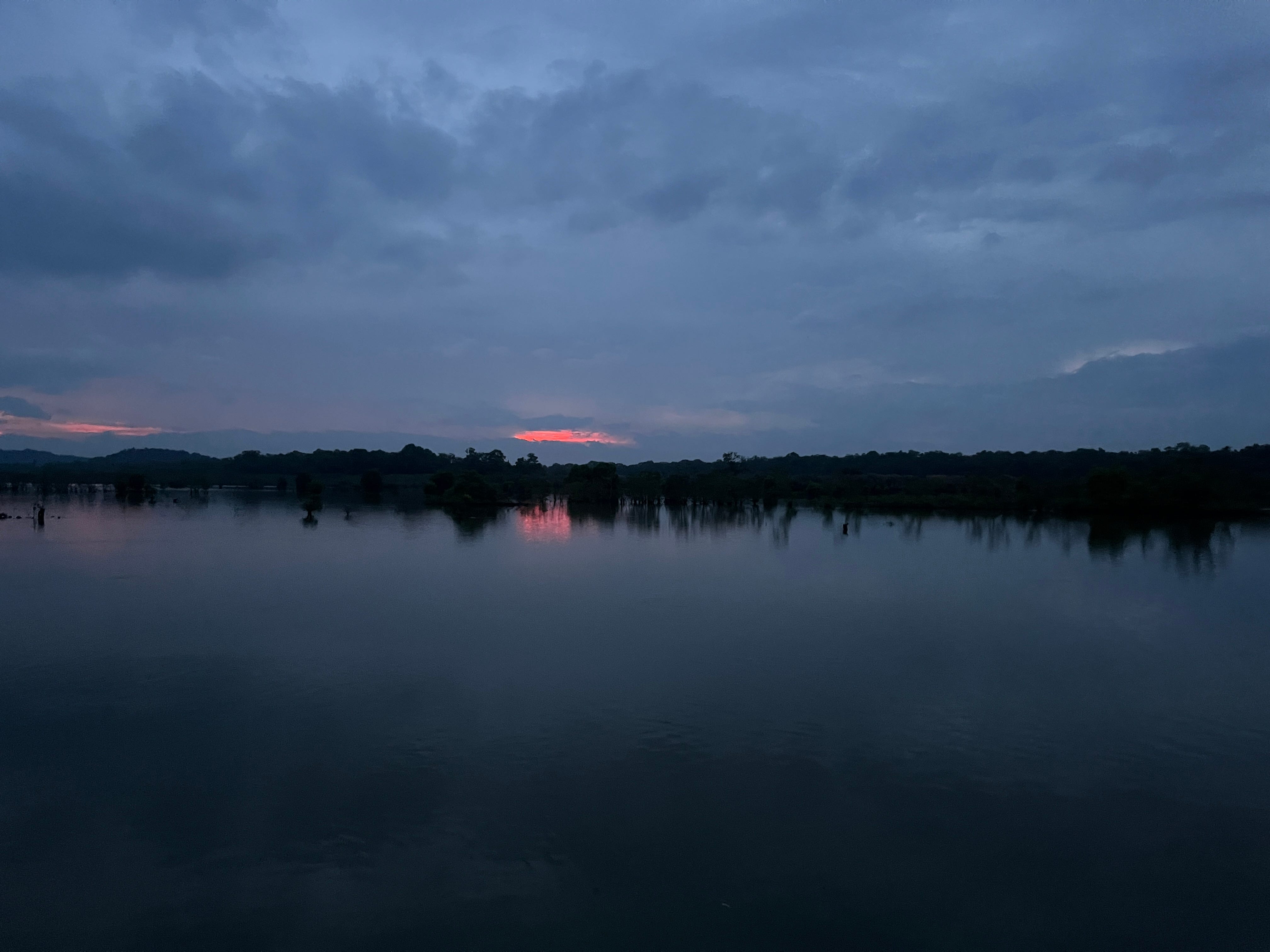
This time, nothing from inside is mercilessly pummelling me. The brass section has learned to rest. The drums have stopped their rumble. And in that silence, I can finally hear the other instruments.
The strings emerge. Gentle, new sounds to my system. They were there all along, playing underneath. Now I have ears for them.
Today, I am not the warrior. I’m someone else. The Witness, maybe. Another set of hormones speaking. The voice inside is kinder, like a big brother saying:
“It’s ok to give up!”
“It’s ok to not finish!”
“It’s ok to live for another day and not fight.”
This is true freedom & not in disguise.
This voice sounds like the part that let me walk away from my company. The part that moved me to Goa. He’s been there all along, waiting.
Cortisol and adrenaline were screaming, but now, some other hormone is getting a word in. The quiet instruments are becoming audible.
Two days later, I got to test whether I could actually hear these new instruments in my orchestra.
Something happened at home. Two of the household staff had overslept badly. The morning work hadn’t started. I was livid. I could sense my rapid breathing. Cortisol and adrenaline were flooding my bloodstream. My Heart rate was up, and I could predict the words that I wanted to unleash. The judgments piled up fast: they’re lazy, irresponsible, taking advantage.
My old habits got triggered immediately. I got all riled up and barked a command: “All of you, come inside. I want to talk about this.” There were three of them.
They came in. And something strange happened.
I was conscious of body language in a way I’d never been before. My body & theirs. I noticed their eyes down, shoulders tight. I could feel the cortisol and adrenaline flooding my system. Chest pressure, heat rising, ready to attack. The brass section is blaring. The drums are pounding.
But then I heard it. A quieter instrument. Just one note underneath the noise.
Oxytocin, maybe? The connection hormone. And it was asking a different question: “Why would anybody be inherently bad? Be curious why they slipped up.”
My body language shifted. My shoulders dropped slightly. My jaw unclenched. My breathing slowed. And curious words, I never knew I had started coming out.
I just asked them: “What happened? Were you unwell? Why did you start so late?”
Instead of all my judgment-laden words that were fighting to come out.
We ended that huddle, which in my previous avatar would have been a bloodbath, with all three of them explaining what had happened and saying they’d make sure it didn’t happen again.
No one got fired. No one got shamed. And the issue actually got solved.
That was the first time I’d heard my orchestra in the middle of my fury and changed the music while it was playing. I felt the cortisol recede, the oxytocin rise, and my body posture change; I had leaned back.
Last week, a senior woman CXO I coach wasn’t standing up for the seniority she’d earned. She was letting opportunities to influence go by. I recognized the pattern: letting one set of hormones drown out the others. We explored which aspect of her hormonal orchestra she could choose to amplify. The choice was hers. She showed up differently in her next board meeting.
I thought I was just “me.” One fixed Ajay. Warrior Ajay. Shotgun Ajay. The me that pushed through pain, that was led by a tornado. Now I’m discovering there’s also a Witness Ajay, a Brother Ajay, an Orchid-Presser Ajay. Different hormones bring different selves forward.
Women learn to recognize these shifting selves earlier. By their twenties, many know “period me” versus “ovulation me” versus “premenstrual me.” I’m discovering this map now, in my sixties. Different timing. Same discovery.
I expect to be meeting this brother as a friend a lot now. Are there more like him? I want to befriend them all!
What if I need both the warrior and the brother who presses orchids? Not replacing one with the other, but expanding my hormonal vocabulary. Letting all the instruments play, not just the drums and brass.
My father conducted with a deep fear hormone, one that led to my 95 out of 100 in maths not being good enough. That fear conducted his orchestra, and mine too, for decades. It served its purpose. Now I’m learning to conduct differently.
I conducted my orchestra for a long time with the same baton. It was always: ‘Not enough. Never enough.’
This morning in Goa, I did something different. I put down the baton.
Not forever & definitely not as a surrender. But long enough to hear what the orchestra sounds like when it plays itself. It knew what it was doing.
Women learn this young. Every month, their bodies override their plans. Sometimes the body knows better than the conductor. But sometimes the body is just making life harder, while deadlines don’t care.
This morning in Goa, I’m learning the musicians’ names. Not just adrenaline and testosterone. But oxytocin. Serotonin. All the hormones I never knew existed. I’m realizing there are multiple possible conductors inside me. The warrior, the brother, the orchid-presser. The orchestra doesn’t always need a conductor. Sometimes I can trust the ensemble. Let the body do what it’s evolved to do.
The brass section made me successful. The strings section might make me whole. Or maybe they’re just different music for a different season.
I heard what I needed to hear then. I’m hearing what I can hear now.
How old will you be when you start listening?
Your writing is a gift to read and learn so much from. What a splendid journey you’ve taken the reader on, Ajay!
Great writing, dear Aju! Incidentally, can you imagine what the situation would have been with boys around 30 years before you, wherein the 'orchid pressing kind' also, was permitted to only do it mentally! Remember that your father was a BOY, in those times.