
Making Friends with Fear
On stability, rebellion, and the adventure mindset

I was sitting in one of our first meetings with the investor who had backed Cequity. We were barely a few months old. That day, we were reviewing the profile of a senior leader for another venture the investor was considering. Impressive resume. Multiple companies across industries.
And then the investor said it. Casually, almost as an aside: “Isn’t this guy a rolling stone? He’s hardly stayed anywhere.”
My stomach dropped. Because he could have been talking about me.
And the contrast was sitting right there with me in the room. My partner was the steady one. He had held one job for the majority of his career. The investor was his relationship first. The steady man had brought the money. I was the variable. The risk.
I sat there, my nose itched a bit, something I only now recognize as an indicator of discomfort. Consumer goods. Retail. Banking. Entrepreneurship. Five industries. Five completely different ways of thinking about customers, teams, and value. This man had just put a lot of money behind me. And here he was, describing my exact career pattern as a red flag in someone else. I didn’t have the neat, linear trajectory that triggered trust with a capital T. I wasn’t the guy who spent twenty years rising through one organization. I was the guy who moved across many.
But even as that insecurity surfaced, something in me resisted. An instinct I couldn’t articulate but felt in my body. I knew where my best learning had come from. From moving into territory where I didn’t know the rules and letting the context teach me.
I knew this because a bicycle in the Himalayas had taught it to me first.
* * *
“I wish I could go slower on this route.”
I heard a car rally driver say this on TV. He had just finished the Himalayan Car Rally, 3,600 kilometers of the most grueling terrain in the country. The interviewer was asking him what he’d do differently. And instead of talking about speed, strategy, or better tires, the man wanted to actually see the mountains he was racing through.
That sentence lodged in my head. And a thought followed it, the kind of thought that only makes sense when you’re 22 and don’t know what’s impossible: What better way to go slower on that route than on a bicycle?
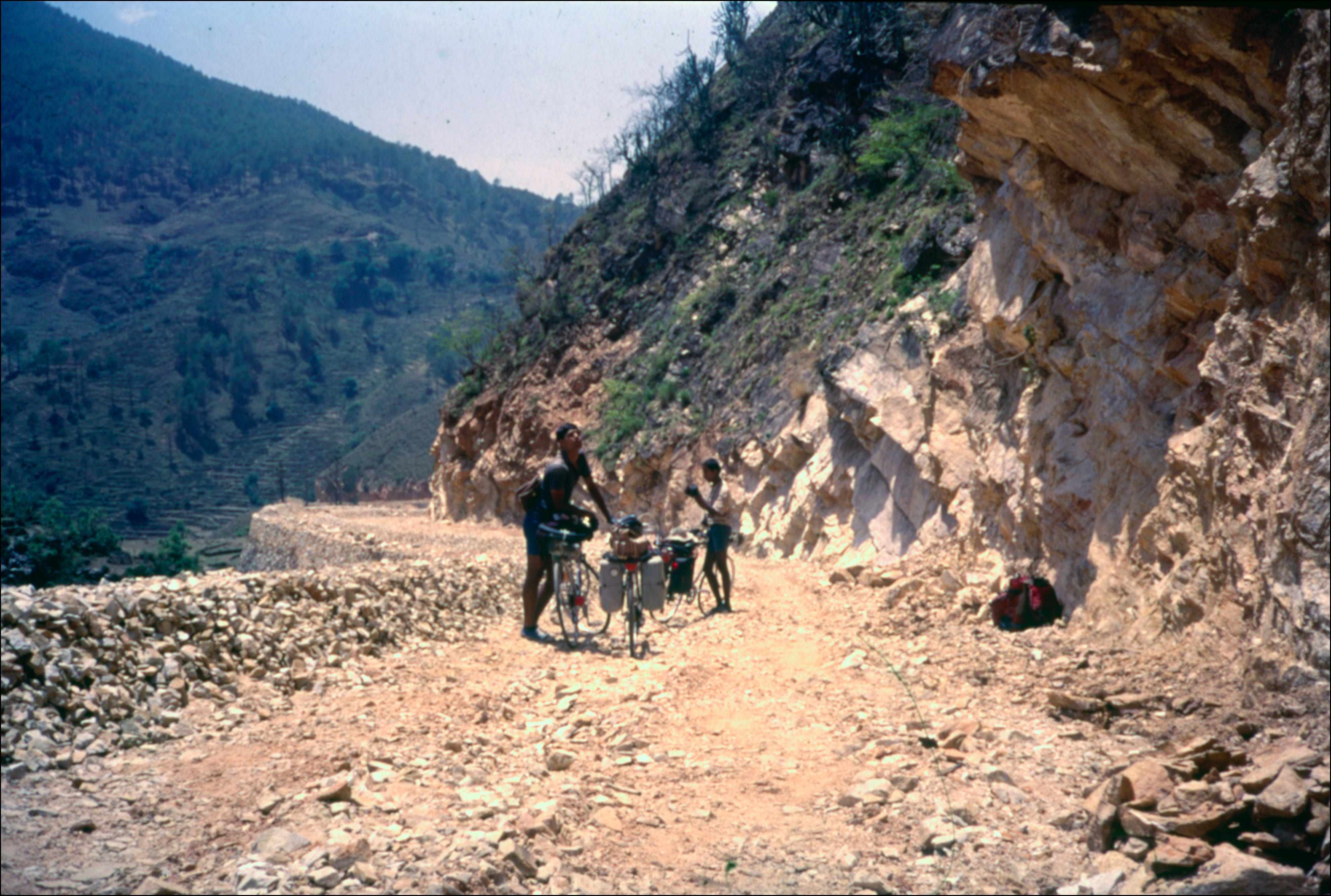
There were three of us. College mates. We decided to retrace the rally route on bicycles. Tarmac, dirt roads, mountain passes, and terrain that had no business being cycled on. We were 22 years old. We carried a mobile exhibition on wildlife and nature conservation, which we set up in villages along the route, talking to villagers about the forests and animals around them. That was our purpose, that was our passion, but equally it was about the madness and audacity of what we were attempting. I remember a small village called Khanag, near Jalori Pass, at about 9000 feet. We struggled our way up, and a kind villager gave us his shed to park in & sleep. Over a hot cup of tea, we began telling him about our philosophy and showed him the chart on protecting our trees. He laughed, still in a kind way & told us we should be showing this in the big cities. He said, “We have lived by this for 100s of years. ” We were humbled that night, not only by the Himalayas!
We slept in schools, Dharamshalas, and Dak bungalows. Some nights, the only roof was a classroom floor. I remember one of those nights, sleeping in the yard of a government school, my cycling partner with his small radio, aerial extended, picking up Bob Seger singing “Against the Wind.” His sound was in the background as I lay on the hard ground in my sleeping bag. “It seemed like yesterday, but it was long ago.”
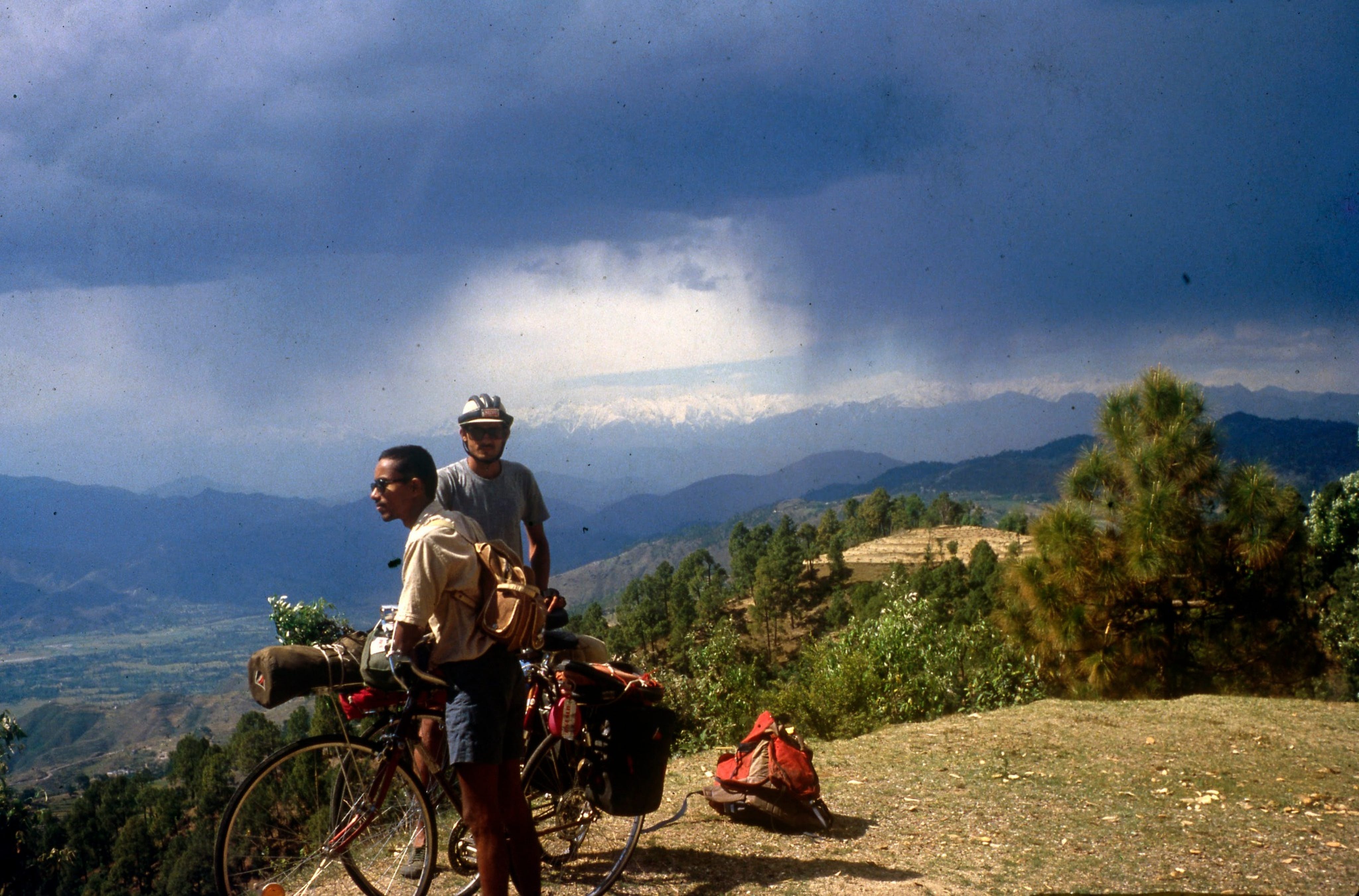
Every kilometer was new, every uphill extracting a large price for our craziness.
As I write this today in Goa, the temperature feels like 40 degrees, and suddenly I’m back on Shere Ghat in Uttarakhand. I remember that dirt road with the mad incline and the never-ending loops of a ghat. The combination of the heat and something bad I must have eaten for breakfast exploded, and I had to ditch the bike and dump it in the bushes. But the 40 kilometers had to be done. There was no other way to safety. That’s what adventure actually looks like. Not the photographs. The moments when you keep going because there is no other option.
The rally driver wanted to go slower. We went slower, all right. Painfully slow, some days. But that slowness forced us to see everything.
What stays with me from that ride isn’t the views, though they were spectacular. What stays is a pattern that repeats every single day. You wake up, pick up your bike, and pedal. You don’t know if there will be food, water, or a place to sleep. And you get on the bicycle anyway.
That’s where I got a complete education. Right there in the Himalayas. I didn’t know it then, but that daily pattern would repeat in every role, every new industry, every company I ever walked into.
* * *
I think I was always restless, still am, though in a different way. My first memory is about me sitting on a low stool in a balcony with my mother keeping watch. My stool was positioned so I was facing the wall, and behind me was a large football field, with my friends running amok. My mother watched to ensure I finished my homework before I was let loose. I think my aggressive foot tapping got adapted in my system from those early days. I was 5 years old on that balcony.
And then, the restlessness became deeply ingrained because, as a government officer, my father moved cities every three years. So, the Rolling Stone philosophy had early links. Though my environment moved every three years, the message at home was consistent. Study hard, invest your time in mastering your subjects, and don’t be restless. I still remember waking up at 4:30 am to prepare for the 12th board exams, and my mother also waking up then to make me tea. After all, marks were a mission.
The rock rebellion age arrived for me in my early 20’s. While classmates took a break from their engineering studies around Christmas in December, three of us rebelled by riding a bicycle from Mumbai to Kanyakumari, about 1,800 kilometers in 18 days. It started as a rebellion, germinating out of our college canteen conversation over the signature Mumbai cutting chai.
That journey had early glimmers of the madness we carried into that rebellion. Almost 270 kilometers from Mumbai, south of Khed and north of Chiplun in Ratnagiri district, was a ghat section that almost did us in: Bhoste Ghat. Even today, if I have to grit it out to do something, I remember that climb. We had reached the start of the ghat section at about 8 pm. We thought we’d make it across the ghat and continued riding. Hammered by the steep climb and the chill, we were at it till 1 am. Finally, we could ride no more, and we just pushed ourselves to the top and then began the steep descent down to the Vashishthi river valley.
As I write this, I am playing Bob Dylan’s “Like a Rolling Stone” in the background. And contemplating what he urges us to ask: How are we feeling without a home, a complete unknown, like a rolling stone? Rock culture completely repositioned the saying, transforming it into youthful rebellion against conformity.
But silently creeping into me was a deeper mindset of adventure and exploration. Adventure meant making friends with fear in the service of some objective, though often the objective was like a mountain peak covered in clouds. Clearly, the destination was somewhere there, but one didn’t exactly know how to get there. My earliest memory is riding a bike in the Indian Kainchi style—holding the handlebars and pedaling with my legs under the bar because I was too short to sit on the seat. Going down what I felt then were steep paths, not knowing if one would reach the end of the road without falling, was the beginning of the journey of making friends with fear.
Here’s something I didn’t understand at 22. The wildlife exhibition we carried on our bikes was a rehearsal for my entire career. We were carrying knowledge from one world into another. We took what we knew about conservation and brought it, physically, into villages where the conversation was entirely different. We had to listen before we could speak. We had to understand what a forest meant to a farmer and not sound armchairish as we broached conservation topics with people who lived closer to nature than we ever did.
We were translators. That turned out to be the pattern of every move I ever made.
Every transition had fear built sharply into it. At Marico, I walked away from a thriving export career to start over in brand management. I think I was afraid. But a small glimmer of who I could become drew me on. At HDFC Bank, friends told me it was career hara-kiri. I still remember the early months, when I was in this crowded meeting room where the bank was discussing its entry into credit cards. The issue was that we were charging less interest on card outstandings than other banks, and we felt that was an edge. I distinctly remember feeling that no, the customers have been sensitized to something else, this is not our winning card. And yet feeling overawed by the banking experience in the room, so I didn’t open my mouth. Each time, I was the guy on the bicycle again. Making friends with fear.
The stability mindset says, “Stick it out and dig deep.” The rebellion mindset says risk and be free. The adventure mindset says make friends with fear and explore.
* * *
I can see now what I couldn’t see in that investor meeting. A person’s stability is his profile; it takes away the fear of adventure, and he seems a reliable bet. A rolling stone seems to show a lack of commitment, a lack of depth. I still remember that we had just started Cequity, and I was impatient as hell. We had a new prospect, someone known to me very closely, almost my mentor. But his team was dilly-dallying; they may have been apprehensive about taking us on. I did what only my true Rolling Stone blood could do: I escalated sharply to my mentor. My partner had a nuanced understanding of managing client relationships; he was aghast. I had no understanding then of managing clients; I had always been a client, so I escalated without fear. We got the business; it grew to almost a third of our total revenues, not only because I had no fear of escalation but because, after I helped get the business, he knew client relationship management well enough to scale it.
My partner brought the relationship and the money. I brought the ability to enter an unfamiliar industry and make whatever I had learned previously useful in a new context. Cequity needed both of us.
I am in touch now with the leaps of faith that I helped take, the ones that allowed Cequity to survive and then thrive. And also with the richness that adventure brought into my work and my life.
A rolling stone gathers no moss. That’s meant as a warning. But a rolling stone doesn’t calcify. It stays exposed to new surfaces, new friction, new textures. Moss is protection, yes. But moss is also insulation. I felt it in that investor’s meeting, sitting next to the steady partner who had brought the money, my nose itching with a discomfort I couldn’t yet name.
The rolling stone didn’t just gather no moss. Yet, it gathered many things that mattered and may not have come otherwise.
* * *
I moved to Goa a few years ago. After decades of prioritizing speed in my work and life, life had truly pivoted. The rally driver’s wish finally became my life. And it is from this slower place that I can look back and see the whole pattern clearly. The mindset I was told to stick it out and dig deep. The mindset that said risk and be free. And the one I actually lived, the one that said make friends with fear and explore.
The mountains were ruthless, and my profile didn’t matter; one still felt the fear. It turned out that the same happened when you worked in new industries.
A 100-year life needs more adventure, not less. A changing career paradigm needs more adventure, not less. AI needs more adventure, not less. Lynda Gratton put it simply: the risk in our careers is not too many detours but too few.
But here’s the question I couldn’t articulate in that investor meeting, and the one that’s been buzzing through my mind lately: Why do we celebrate adventure at 22 and treat it as a red flag at 42, 52, or 62? Why did moving across unfamiliar terrain stop being called courage?
Perhaps the view is we have “more to lose”? I have moved across disciplines and considered it a handicap until I learned my strengths lay in that very ability to start anew.
This was a great tracing of the adventure of life!